Microphone Model 1
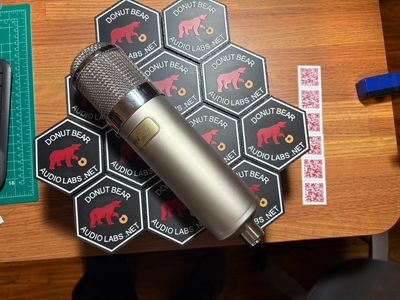
Microphone Model 1
Model 1 is a highly detailed, modern interpretation of the legendary Neumann U47, built to capture the same musical authority, weight, and forward vocal presence that made the original a studio standard. Rather than relying on scarce or aging vintage parts, Model 1 is constructed using fully modern, commonly available components — ensuring long-term serviceability, repeatable performance, and parts availability for decades to come.
A Modern U47 — Without the Vintage Fragility
Vintage U47 microphones are cherished for their tone, but many examples have become inconsistent over time due to component drift, capsule aging, and discontinued parts. Model 1 solves this by preserving the classic sonic intent while using stable modern equivalents for every critical element in the microphone’s signal path. The result is a microphone that remains faithful to the U47’s character while offering better future-proofing, reliability, and maintainability.
Model 1 includes stepped polar pattern selection adjustable from the power supply unit, allowing pattern control between omnidirectional, cardioid, and figure-8, with additional stepped positions in between. This differs from the original U47, which is traditionally limited to cardioid and omnidirectional. In this way, Model 1 can be considered a U47/U48-style microphone, since it provides access to all three primary patterns and intermediate steps, offering expanded, modern flexibility while retaining U47 voicing.
Built by Hand — One at a Time
Every Model 1 microphone is built by hand, by me, with close attention paid to mechanical fit, wiring integrity, and electronic performance. This is not a mass-produced microphone — each unit is assembled and verified as an individual instrument.
Circuit and Component Philosophy
The Model 1 circuit follows the classic U47 design approach: high headroom, rich harmonic structure, and controlled saturation characteristics. Each component in the microphone’s audio path is selected with intention and tested for performance and consistency.
To maximize repeatability and reduce variability, critical components in the audio path are rigorously impedance matched to ensure predictable loading behavior and consistent response from microphone to microphone. This attention to impedance matching improves unit-to-unit consistency and helps preserve the intended tonal balance and harmonic behavior of the design.
Because the design uses currently produced, reputable components, each microphone can be replicated and serviced without dependence on rare vintage inventory.
Audio Testing and Verification
Frequency Response Characterization
Each Model 1 microphone is measured and verified for frequency response performance. Testing confirms:
- Smooth, controlled lows with U47-style weight
- A present midrange that supports vocals and acoustic instruments
- A natural top-end — detailed without becoming brittle or “modern-hyped”
Frequency response measurements are used not only as a performance check, but also as a consistency tool to ensure repeatability across builds.
Voicing and Matching to Vintage U47 References
Model 1 is tested against reference U47 microphones to validate overall voicing and behavior, including:
- tonal balance across the full spectrum
- proximity effect characteristics
- transient response on plosives and percussive sources
- harmonic texture and “size” through the midrange
The goal is not to create a sterile clone, but a faithful modern U47-style microphone that behaves like the originals.
Real-World Studio Validation
Model 1 microphones have been evaluated and used in professional studio environments, including practical comparison and recording work involving vintage-referenced microphone chains. Testing has included microphone evaluation and listening comparisons involving U47 microphones at:
- 25th Street Recording
- Wally's Hydeout at Hyde Street Studios
These environments provide meaningful validation because they represent real-world recording conditions — familiar rooms, known signal chains, and trusted reference microphones — rather than purely laboratory-based testing.